🔒 Introduction
When people hear “cybersecurity,” they often picture hooded hackers typing furiously in a dark room. But in reality, digital safety affects all of us—every single day. I’ve lost count of how many friends have shrugged off a strange text message or used the same password everywhere because “it’s just easier.” That casual attitude is exactly why safety matters so much. It’s not about being paranoid; it’s about understanding that a single overlooked detail can unravel everything from your personal photos to a hospital’s ability to function.
🧠 Detailed Explanation
💥 The Cost of Getting It Wrong
Cybersecurity safety isn’t a luxury reserved for tech giants. Neglecting it can lead to:
- Financial Loss 💷 – Direct theft of funds, ransomware payments, and the long-tail costs of incident response, legal fees, and system restoration. A small business hit by a ransomware attack might not survive the aftermath.
- Reputational Damage 📉 – Trust is fragile. Customers leave, partners distance themselves, and headlines don’t forget. Rebuilding a brand after a data breach can take years.
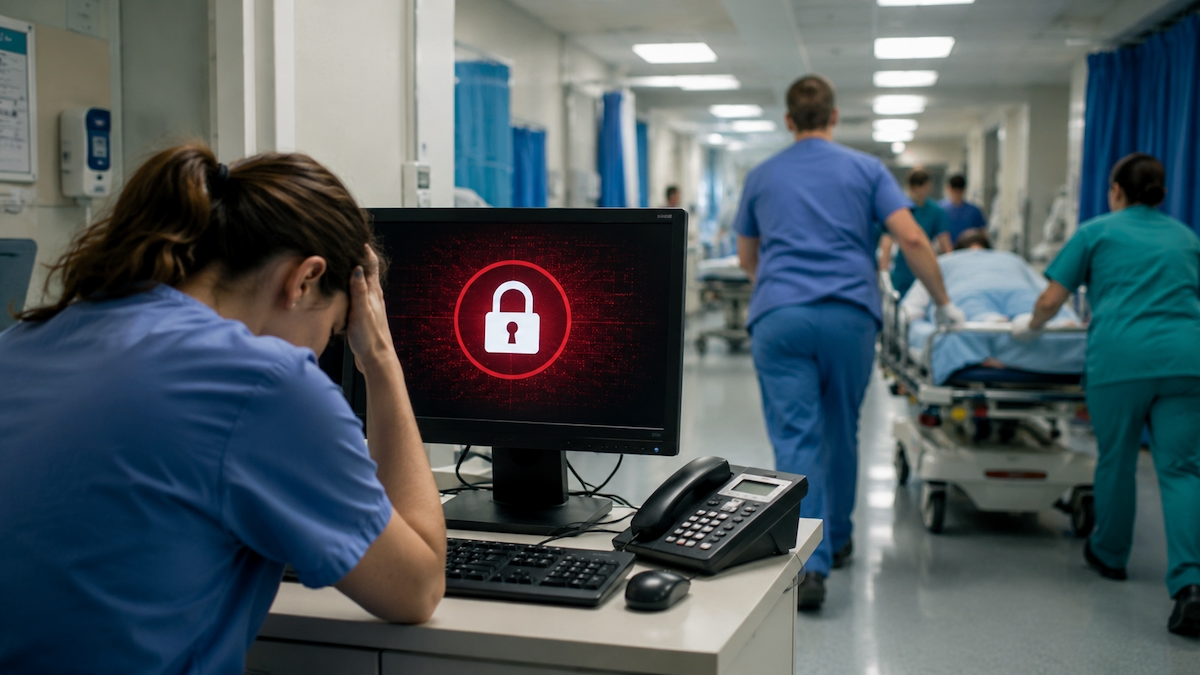
- Operational Chaos 🏥 – When systems lock up, work stops. In critical sectors like healthcare or energy, that’s not just inconvenient—it’s dangerous.
- Legal and Regulatory Punishment ⚖️ – Under regulations like the UK GDPR, organisations can face massive fines. Even individuals can be prosecuted for negligence.
- Personal Harm 🛡️ – Stolen identities, leaked private conversations, or lost access to cherished memories. The emotional toll is real and often underestimated.
🔗 Why It’s a Human Problem, Not Just a Tech One
I’ve seen brilliant security tools undone by someone holding the door open for a “delivery person” who wasn’t one. Safety starts with behaviour:
- Phishing scams prey on curiosity, urgency, or fear—emotions that no firewall can filter.
- Weak or reused passwords turn one compromised site into a skeleton key for your entire digital life.
- Unpatched devices are like leaving a window open because you didn’t think a burglar would check the second floor.
The technology matters, but the person clicking, typing, or ignoring an alert is always part of the equation.
🧱 Protecting What Matters
At its core, cybersecurity safety preserves what I call the “three pillars” (some call it the CIA triad, but we’ll explore that another time). The idea is simple:
- Keep sensitive things private.
- Make sure information stays accurate and unaltered.
- Ensure you can access what you need, when you need it.
When safety fails, at least one of those pillars crumbles. Imagine your medical records being altered, or your business website vanishing right before a product launch. That’s not hypothetical—it’s a constant risk that good safety habits reduce dramatically.
🧘♀️ Peace of Mind as a Productivity Booster
Here’s something often overlooked: when people feel safe digitally, they’re more innovative. They share files without hesitation, collaborate freely, and experiment with new tools. A secure environment removes the background anxiety of “what if this goes wrong,” letting you focus on the things that actually matter.
🌍 Real-World Example – WannaCry and the NHS
In 2017, the WannaCry ransomware attack swept across the globe, but its impact on the UK’s National Health Service (NHS) was a brutal wake-up call. Hospitals had to cancel thousands of appointments, divert ambulances, and turn patients away because staff couldn’t access medical records, imaging systems, or even basic email.
The culprit? Unpatched Windows systems that had been warned about for weeks. It wasn’t a sophisticated zero-day—just a missed safety update. The attack didn’t steal data; it locked it. And in a healthcare setting, locked data can mean delayed treatment and real human suffering. That day proved that cybersecurity safety isn’t an IT issue—it’s a patient safety issue.
🔑 Key Points
- Cybersecurity safety protects money, reputation, and lives—not just machines.
- Human behaviour (clicking, password reuse, ignoring updates) is often the weakest link.
- Consequences include financial loss, legal trouble, operational shutdowns, and personal harm.
- Even simple measures—like patching and phishing awareness—can prevent catastrophic outcomes.
- Safety fosters trust and enables people to work without fear, boosting productivity and creativity.